Attic Insulation and Ventilation: Why Baffles Matter in Newfoundland Homes
If your attic has plenty of insulation, does that automatically mean your home is properly insulated?
Not necessarily.
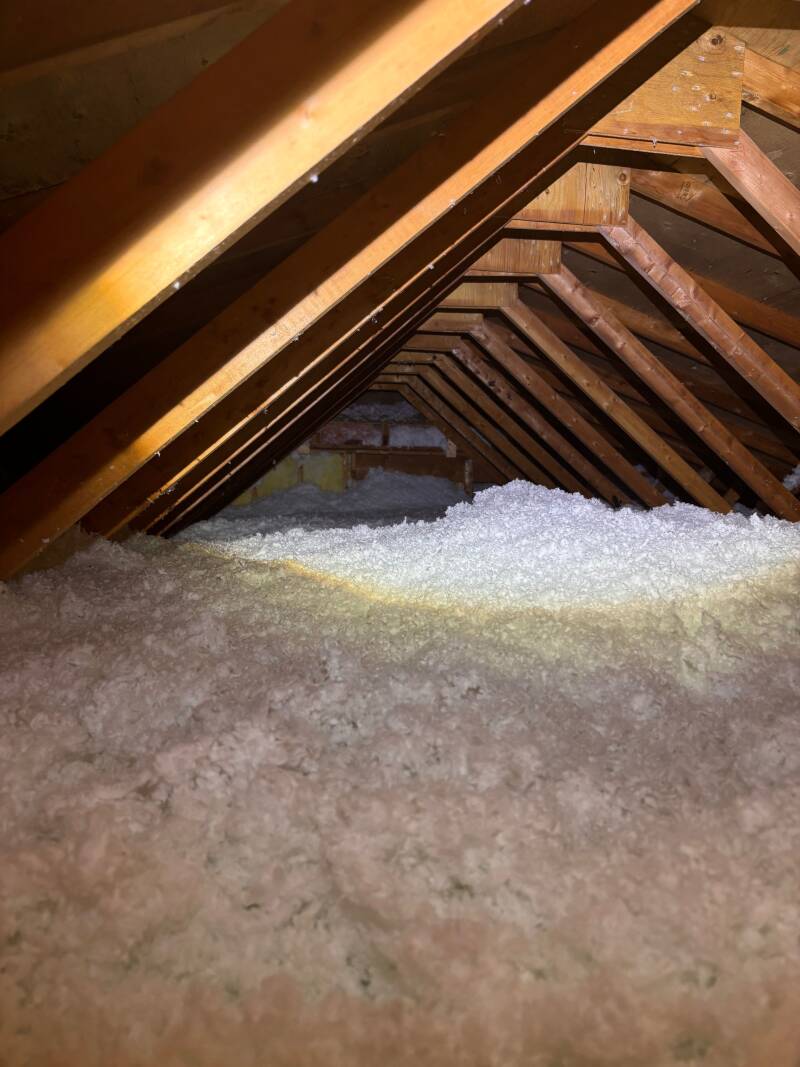
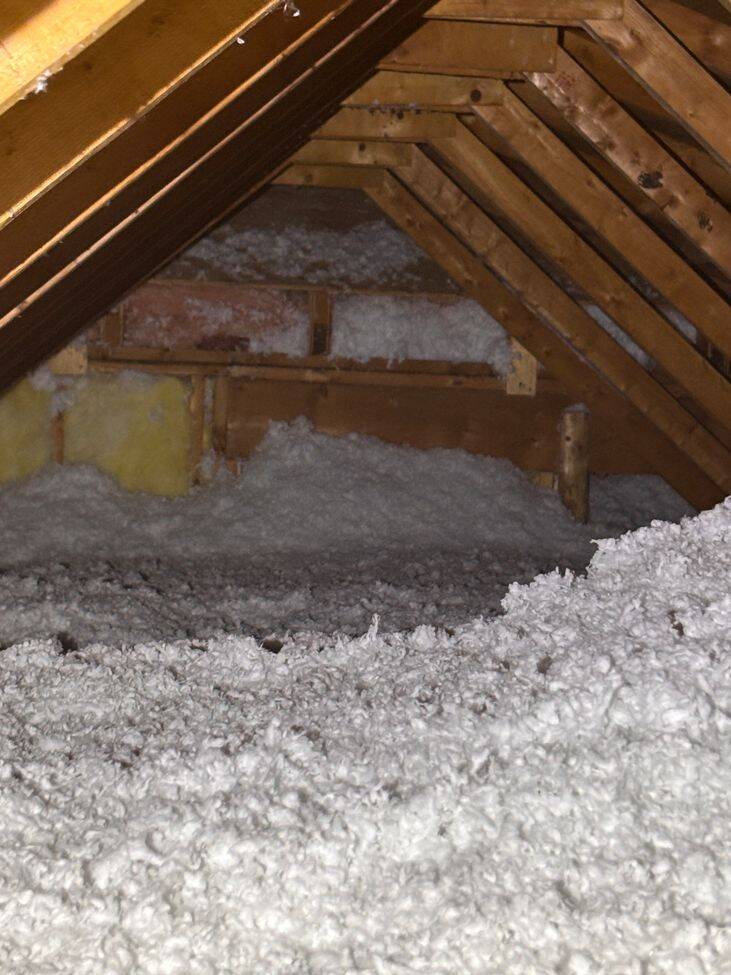
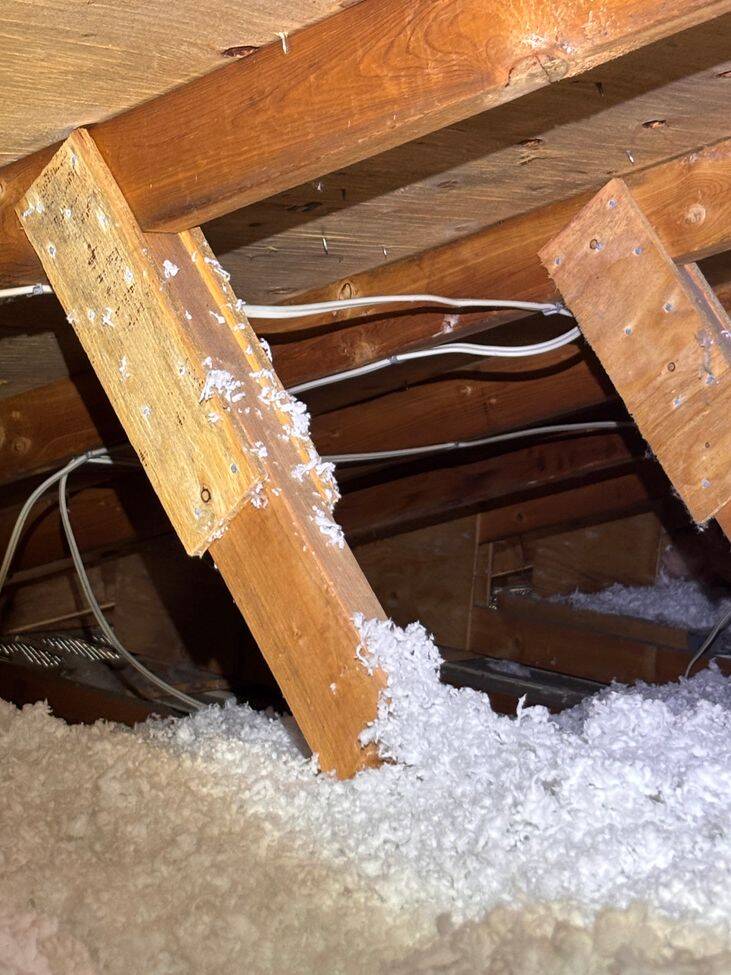
During a recent home inspection in Newfoundland, I found a good example of why attic insulation needs to be evaluated as part of an entire system. The attic contained a substantial amount of loose-fill insulation, but the insulation was unevenly distributed. Some areas contained heavy accumulation while other locations, particularly closer to the eaves, had noticeably reduced coverage.
Loose insulation was also visible on portions of the attic framing.
Conditions like these are one reason a professional attic inspection involves much more than simply measuring insulation depth.
At Rocky Shores Home Inspection, I evaluate attic insulation, ventilation, visible airflow pathways, roof sheathing, moisture conditions and other accessible components to better understand how the attic is performing.
What Causes Attic Insulation to Move?
Loose-fill attic insulation can become uneven for several reasons, including previous work in the attic, foot traffic, installation practices and air movement.
One condition inspectors look for is commonly called wind washing.
Wind washing can occur when outside air entering through soffit ventilation moves directly across or through loose-fill insulation. Over time, this airflow can contribute to insulation being displaced from areas near the eaves.
This does not mean every uneven attic is experiencing wind washing. The overall attic conditions need to be evaluated before determining the likely cause.
Why Uneven Attic Insulation Matters
Attic insulation works best when it provides reasonably continuous and uniform coverage.
Think about insulation like a winter jacket. A jacket may be extremely thick across most of your body, but if several areas are missing insulation, those locations can still allow considerable heat transfer.
The same principle applies to your home.
Thin, compressed, missing or displaced attic insulation can contribute to:
- Increased heat loss
- Cold spots on ceilings
- Uneven indoor temperatures
- Reduced energy efficiency
- Increased heating demand
- Localized surface-temperature differences
In Newfoundland’s cold and windy climate, maintaining consistent attic insulation coverage can be particularly important.
What Are Attic Baffles?
Attic baffles, also commonly called rafter vents or ventilation chutes, are installed near the eaves to help create a defined airflow pathway between the soffit ventilation and the upper attic.
Instead of ventilation air blowing directly into loose-fill insulation, properly installed baffles help direct the incoming air upward along the underside of the roof deck.
This allows the attic insulation and ventilation systems to work together rather than against each other.
Why Attic Baffles Add Value
Properly installed attic ventilation baffles can help:
- Maintain airflow from soffit vents
- Keep insulation from blocking ventilation openings
- Reduce direct airflow through loose-fill insulation
- Reduce the potential for wind washing
- Maintain more consistent insulation coverage
- Improve overall attic ventilation performance
Baffles are not a solution to every attic ventilation problem, and their installation needs to suit the roof and soffit configuration.
However, where soffit ventilation is present, establishing a clear airflow pathway can be an important part of improving attic performance.
Should You Just Add More Attic Insulation?
Not always.
If existing insulation has been displaced because of airflow, simply blowing additional insulation into the attic may address the symptom without addressing the underlying condition.
A better approach is to first evaluate why the insulation is uneven.
Where necessary, the ventilation pathway can be improved with properly installed baffles or other appropriate methods. Existing insulation can then be redistributed and additional insulation installed where needed.
This provides a more complete approach to improving the home’s thermal performance.
How Attic Ventilation Helps Control Moisture
Attic ventilation isn’t only about heat.
One of its important functions is helping manage moisture that reaches the attic.
Warm indoor air can carry water vapour into an attic through gaps and penetrations in the ceiling assembly. When that warm, moisture-containing air reaches sufficiently cold surfaces, such as the underside of the roof sheathing during a Newfoundland winter, condensation or frost can develop.
Proper air sealing, insulation and ventilation all play a role in managing these conditions.
This is another reason I evaluate the attic as a complete system rather than looking at insulation, ventilation and moisture as separate issues.
Can Thermal Imaging Detect Missing Attic Insulation?
Thermal imaging can be an excellent screening tool for identifying unusual surface-temperature patterns.
During a home inspection, an infrared camera may reveal cooler areas along ceilings or exterior wall-to-ceiling intersections.
However, an important distinction needs to be made:
An infrared camera detects differences in surface temperature. It does not directly detect moisture or see through walls and ceilings.
A thermal anomaly could potentially be associated with:
- Missing or displaced insulation
- Air leakage
- Thermal bridging through framing
- Moisture-related evaporative cooling
- Heating or cooling systems
- Outdoor temperature conditions
That’s why thermal imaging findings should be compared with other inspection observations whenever practical.
For example, if thermal imaging identifies a cooler ceiling area and the attic inspection reveals noticeably reduced insulation directly above that location, the two observations can provide useful information about the home’s thermal performance.
What Does a Home Inspector Look for in an Attic?
During an accessible attic inspection, some of the conditions I look for include:
- Insulation type, approximate depth and coverage
- Missing, compressed or displaced insulation
- Soffit ventilation
- Attic ventilation baffles
- Blocked ventilation openings
- Roof and ridge ventilation
- Roof sheathing condition
- Water staining
- Evidence of condensation or frost
- Air leakage pathways
- Bathroom exhaust ducting
- Plumbing and electrical penetrations
- Visible structural components
- Thermal anomalies when conditions are suitable
No single observation tells the entire story.
The goal is to understand how these components interact.
Does Uneven Insulation Mean There Is a Moisture Problem?
No.
Uneven insulation by itself does not establish that moisture intrusion or condensation is occurring.
It indicates that insulation coverage may not be uniform and that the cause should be considered.
If moisture-related evidence is also present—such as staining, damp materials, frost, condensation or deterioration—those observations can then be evaluated together.
This distinction is important because a good home inspection should explain the evidence without unnecessarily alarming the homeowner.
Rocky Shores Home Inspection Tip
If your attic contains plenty of insulation but some areas have considerably less coverage than others, don’t automatically assume that adding more insulation is the complete solution.
Find out why the insulation became uneven first.
Where airflow from soffit ventilation is contributing to displaced loose-fill insulation, properly installed attic baffles can add significant value by creating a defined ventilation pathway and helping protect the insulation from direct airflow.
Once the ventilation arrangement is addressed, insulation can be redistributed or supplemented where necessary.
That’s building science in practical terms:
Ventilation + air sealing + insulation + moisture management all work together.
At Rocky Shores Home Inspection, my goal isn’t simply to identify deficiencies. I want clients to understand what was found, why it matters and what reasonable next steps to consider.
A home makes a lot more sense when you understand how its systems work together.
Rocky Shores Home Inspection — serving Corner Brook, Stephenville, Deer Lake, the Northern Peninsula, Western Newfoundland and communities throughout Newfoundland.
Add comment
Comments