Roofing and Attic Ventilation in Newfoundland: Why Your Roof Needs to Breathe
When most people look at a roof, they look at the shingles.
Are they curling? Are any missing? Does the roof look old?
Those are important questions, but during a home inspection in Newfoundland, the shingles are only one part of the roofing system. What is happening underneath the roof can be just as important.
At Rocky Shores Home Inspection, roofing and attic ventilation are inspected together whenever conditions and access allow because a roof is a complete system — roof covering, flashing, ventilation, insulation and moisture control all work together.
A Roof Can Look Good and Still Have Problems
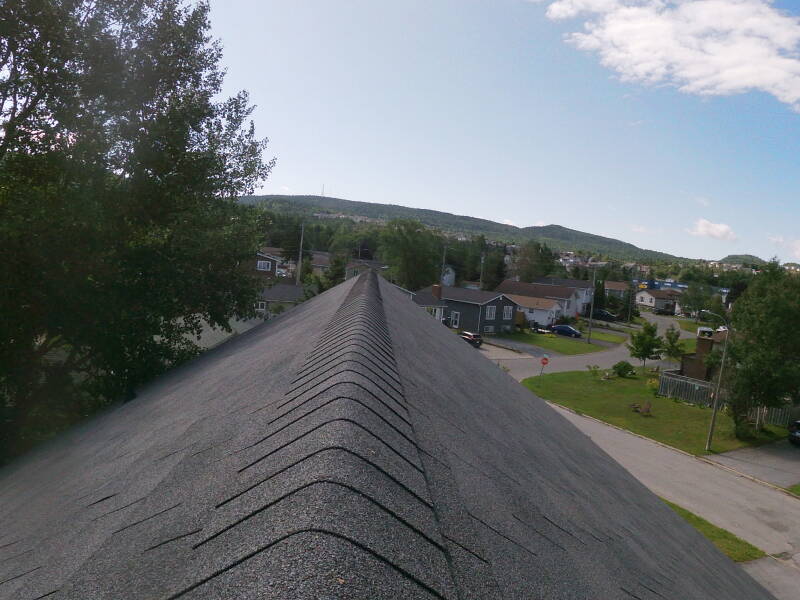
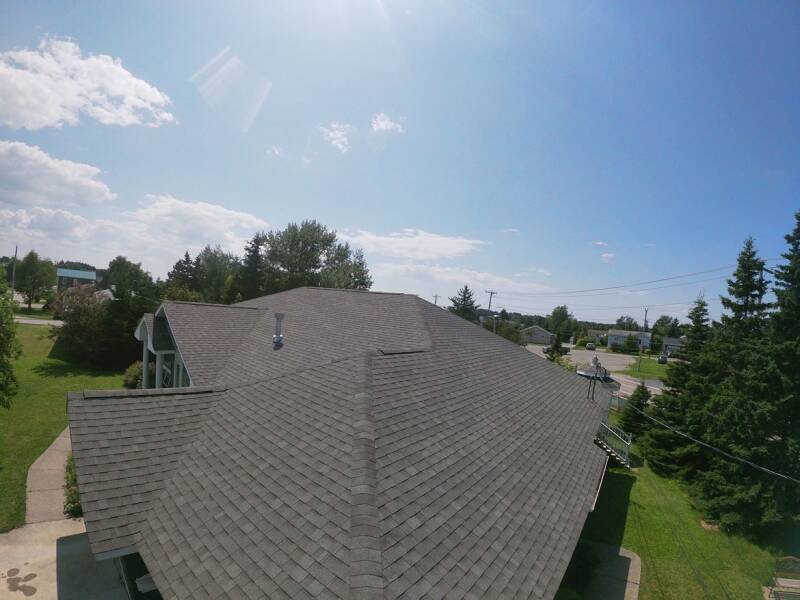
The roof in these photos is a good example of why a home inspector needs to look beyond the obvious.
From the exterior, asphalt shingles may appear to be in reasonably good condition. But that alone doesn’t tell us whether the attic is properly ventilated.
A ridge vent along the peak of a roof may look like ventilation is present, but the important question is:
Does it actually have a clear path to move air out of the attic?
A ridge vent relies on an opening in the roof sheathing beneath it. If that opening is missing, undersized or obstructed, the vent may provide little or no effective exhaust ventilation.
That isn’t something you can determine simply by standing on the ground and seeing a ridge vent.
Attic Ventilation Requires Both Intake and Exhaust
Proper attic ventilation is about airflow.
Typically, cooler outside air enters through soffit ventilation near the lower edges of the roof, moves through the attic space, and warmer, moisture-laden air exits through ridge vents or other roof vents near the upper portion of the roof.
Having only one side of that system can significantly reduce its effectiveness.
For example:
- A ridge vent without adequate soffit intake may not move air effectively.
- Soffit vents without adequate exhaust can leave warm, moist air trapped in the attic.
- Insulation can block soffit openings when proper ventilation baffles are not installed.
- A ridge vent can be installed even though the roof sheathing beneath it was never properly opened.
That is why simply seeing vents on a house doesn’t necessarily mean the attic is properly ventilated.
Why This Matters in Newfoundland
Our climate can be hard on roofing systems.
Newfoundland homes regularly experience strong winds, wind-driven rain, snow, freezing temperatures and major temperature changes. Inside the home, everyday activities such as cooking, showering and even breathing introduce moisture into the indoor air.
Some of that warm, moisture-containing air can migrate into the attic.
When it reaches a cold roof deck, condensation can develop.
Over time, inadequate attic ventilation combined with excessive moisture can contribute to:
roof sheathing deterioration, staining, mold-like growth, wet or compressed insulation, corrosion of roofing fasteners and premature deterioration of roofing materials.
During winter, heat loss into the attic can also contribute to uneven snow melting and conditions associated with ice damming.
Ventilation and Insulation Work Together
Ventilation isn’t the only part of the equation.
A properly performing attic also depends on adequate insulation and air sealing between the living space and attic.
Insulation helps slow heat transfer from the home into the attic, while air sealing helps reduce the movement of warm, moisture-laden indoor air through openings around attic hatches, plumbing penetrations, electrical penetrations and other gaps.
Ventilation then helps manage the heat and moisture that reach the attic.
This is why I don’t look at attic insulation, ventilation and roofing as completely separate systems during an inspection. One can affect the performance of the others.
What I Look for During a Roof and Attic Inspection
When safely accessible, a home inspection can include observations of the asphalt shingles, flashing, penetrations, roof vents, ridge ventilation, soffits, fascia and drainage components.
Inside the attic, the inspection provides another side of the story.
I look for visible indications of moisture, staining, ventilation pathways, insulation conditions, blocked soffits, ventilation baffles, roof sheathing condition and other evidence that may help determine how the roof and attic are performing.
That inside-and-out approach can reveal conditions that simply aren’t visible from the street.
The Rocky Shores Difference
A home inspection shouldn’t just tell you that a house has asphalt shingles and a ridge vent.
The goal is to help you understand how the components work together and what the observations may mean for the home you’re considering purchasing.
At Rocky Shores Home Inspection, I take an educational approach to inspections. I want my clients to understand what I found, why it matters and what should be done next.
Because when you’re buying a home in Newfoundland, knowing what is happening under the shingles can be just as important as knowing what is happening on top of them.
Rocky Shores Home Inspection
Serving Western Newfoundland and beyond.
Know what you’re buying. Understand what you’re looking at.
Add comment
Comments