Read our latest news
Could Your Neighbour’s Sewer Be Running Through Your Basement?
When buying an older home in Corner Brook, most people expect the home inspector to examine the foundation, electrical system, plumbing, roof and heating equipment. What many buyers may not expect is to discover that a neighbouring property’s sewer line travels through the basement of the home they are considering purchasing.
That is exactly what I encountered during a recent home inspection in Corner Brook, Newfoundland.
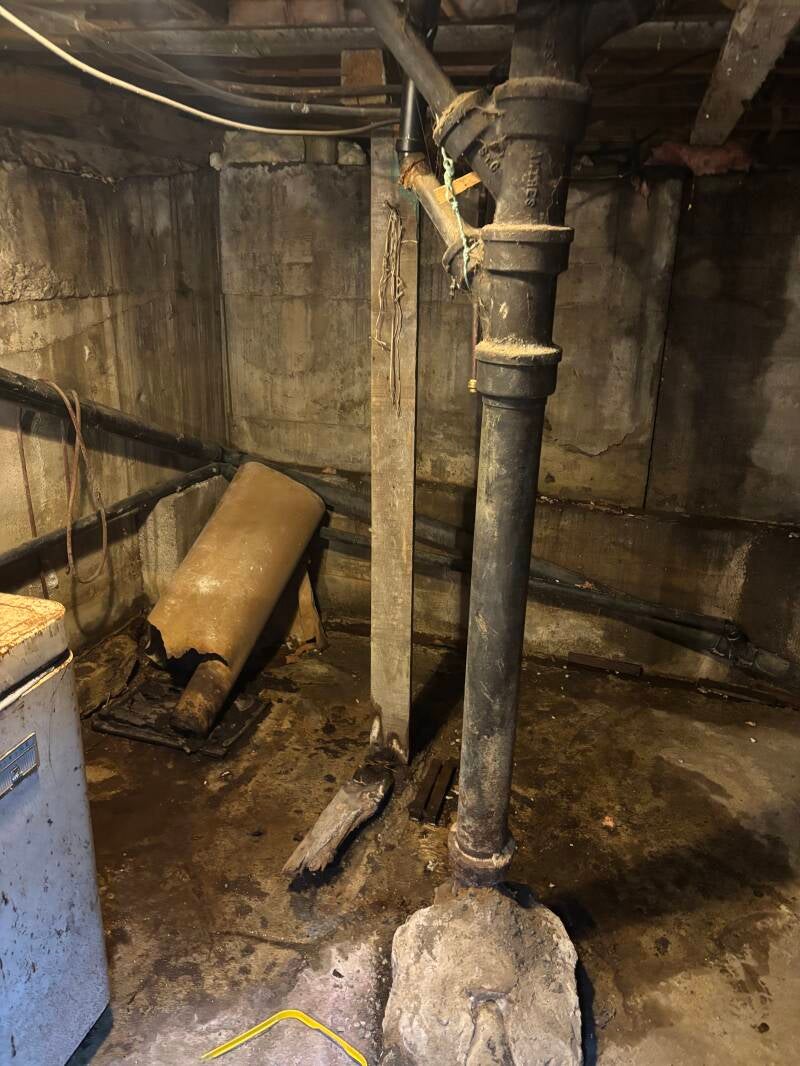
The basement contained an older shared drainage arrangement. The sewer piping serving the neighbouring property entered the inspected home’s basement and connected with its drainage system before continuing toward the municipal sewer. The arrangement itself was important for the buyer to understand, but the condition of the piping made this discovery much more significant.
Sections of the old cast-iron sewer pipe were severely deteriorated. The metal had corroded and broken away, leaving large openings in the pipe. Moisture and contaminated material were visible around the damaged sections and on the basement floor.
This was not a minor plumbing observation. It was an example of why a thorough home inspection involves following the visible plumbing system, understanding where lines enter and leave the building, and looking closely at older materials.
What is a shared sewer line?
A shared sewer line is a drainage arrangement in which wastewater from more than one property travels through a common section of piping before reaching the municipal sewer system.
Shared drainage arrangements may be found in some older neighbourhoods where homes and underground services were constructed differently from the way individual sewer laterals are commonly installed today. The visible connection may be inside one home, beneath a basement floor or underground between the properties.
A shared sewer connection does not automatically mean that the system is defective. However, buyers should understand:
● which properties are connected to the line;
● where the shared section travels;
● the material and apparent condition of the piping;
● whether accessible cleanouts are present;
● whether an easement or written maintenance agreement exists; and
● who may be responsible for maintenance, blockages or replacement.
A home inspection can identify visible conditions and recommend further investigation, but ownership and legal responsibility may require confirmation through property documents, the municipality, a real estate lawyer or other appropriate professionals.
Why old cast-iron sewer pipes can become a problem
Cast iron was widely used for drain, waste and vent piping because it is strong and helps reduce the sound of flowing wastewater. However, it does not last forever.
As cast-iron piping ages, corrosion can gradually thin the pipe walls. Scaling may develop inside the pipe, reducing its interior opening and making it easier for waste to collect. Exterior rust, cracks, leaking joints and complete material loss can also develop.
In this Corner Brook basement, the deterioration had progressed far beyond light surface corrosion. Portions of the pipe wall were missing, creating direct openings through which wastewater could escape.
Potential consequences of failed sewer piping include:
● wastewater leakage into the basement;
● unpleasant odours and unsanitary conditions;
● moisture damage to nearby materials;
● recurring blockages or slow drainage;
● pest attraction;
● damage hidden beneath the concrete floor; and
● costly excavation and pipe replacement.
When the damaged pipe is part of a shared system, the concern becomes more complicated because wastewater from another property may continue passing through the affected basement.
Why this could easily be missed
Plumbing systems in older homes are rarely laid out in a perfectly straight or obvious manner. Piping may disappear behind stored belongings, enter a foundation wall, run beneath a concrete floor or contain a mixture of old and newer materials.
In this home, some newer plastic piping had been connected to sections of the older drainage system. Replacing one visible portion does not necessarily mean that the complete sewer line has been upgraded. Older cast iron may remain below the floor, inside a wall or farther downstream.
If the basement had been fully finished, much of this arrangement might have been concealed. That is why visible access in an unfinished basement can provide valuable information during a home inspection.
Would a sewer scope help?
A standard home inspection is visual and non-invasive. It can reveal exposed deterioration, leakage, unusual connections and the materials visible inside the home, but it cannot show the complete interior condition of a buried sewer line.
A sewer scope inspection uses a specialized camera inserted through an accessible cleanout to examine the inside of the sewer lateral. Depending on access and conditions, it may reveal:
● cracks or separated joints;
● internal corrosion and scaling;
● low areas where water collects;
● root intrusion;
● debris or restrictions;
● collapsed or damaged sections; and
● changes between different piping materials.
No camera inspection can guarantee that every concealed condition will be found, and severely damaged or restricted piping may prevent the camera from travelling through the complete line. Even so, a sewer scope can provide valuable information that cannot be obtained by looking only at the visible plumbing.
Where a shared line is suspected, the scope and any plumbing evaluation should be carefully planned so the route and connections can be properly understood.
What should a Corner Brook homebuyer do?
Finding a shared sewer arrangement does not necessarily mean that a buyer should walk away from a home. It means the buyer should obtain enough information to make an informed decision.
Before completing the purchase, the buyer may wish to:
1. Ask the seller what they know about the shared sewer connection and its repair history.
2. Review available property documents for easements or shared-maintenance agreements.
3. Ask the City of Corner Brook whether relevant service information is available.
4. Have a qualified plumber evaluate damaged or unusual piping.
5. Arrange a sewer scope when suitable access is available.
6. Obtain repair estimates before the inspection or financing conditions expire.
7. Ask a real estate lawyer to clarify ownership and responsibility where necessary.
The goal is not to create unnecessary fear. It is to ensure that the buyer understands what is present, why it matters and what should be investigated next.
The value of looking beyond the obvious
The large openings in this cast-iron pipe did not develop overnight. They were the result of long-term deterioration in a drainage system that involved more than one property.
This Corner Brook home inspection showed why it is important to examine more than the attractive finishes upstairs. An open basement, an unusual pipe entering a wall or a mixture of old and new plumbing can tell an important story about the home.
At Rocky Shores Home Inspection, my approach is straightforward: explain what was found, why it matters and what should be done next. My inspections are designed to help buyers better understand the home—not to alarm them.
If you are purchasing an older home in Corner Brook or elsewhere in Western Newfoundland, ask about the age and condition of the sewer piping as well as where it travels. A careful home inspection, combined with a sewer scope when appropriate, may uncover information that could otherwise remain hidden until after you receive the keys.
Contact Rocky Shores Home Inspection to book a home inspection or ask about adding a sewer scope inspection.
Frequently asked questions
Are shared sewer lines legal in Corner Brook?
The existence of a shared line does not by itself establish whether the arrangement complies with current requirements or what legal rights apply. Older properties may have established arrangements that predate present-day practices. Property records, municipal information and legal advice may be required to confirm the status of a specific connection.
Who pays when a shared sewer line needs repair?
Responsibility may depend on where the failure is located, who owns the affected piping and whether an easement or shared-maintenance agreement exists. Buyers should not assume that the cost will automatically be divided equally.
Can a home inspector confirm where an underground sewer line goes?
A home inspector can examine visible piping and may identify the apparent direction of a line, but concealed or underground routing cannot always be confirmed during a standard inspection. A sewer scope, plumbing evaluation, municipal records or additional locating work may be needed.
Should older cast-iron sewer piping always be replaced?
Not solely because it is cast iron. The recommendation should be based on its condition, performance, accessibility and remaining serviceability. Cracks, leakage, major corrosion, restrictions or missing pipe wall material warrant prompt professional evaluation.
Is a sewer scope included in a regular home inspection?
A sewer scope is a specialized ancillary service and is separate from the standard visual home inspection. Ask about availability when booking, particularly when purchasing an older property or when cast-iron sewer piping is present.
Add comment
Comments